



Indian Astronaut Shukla Tests Algae for Space Life Support
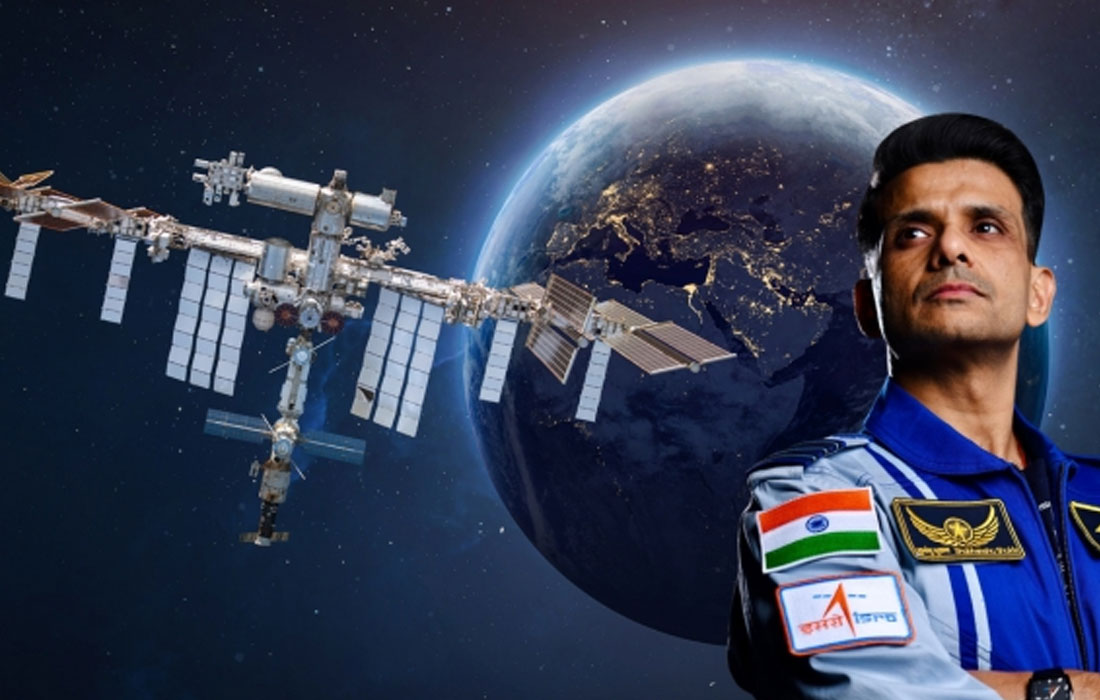
New Delhi, July 23 — Indian astronaut Shubhanshu Shukla carried out important biological experiments aboard the International Space Station (ISS) to study how human life can be supported in space. The government shared the details in Parliament on Wednesday.
Shukla, who became the first Indian to reach the ISS last month, returned to Earth on July 15 after an 18-day mission filled with science experiments and space activities led by ISRO.
In a written reply to the Rajya Sabha, Union Minister for Science and Technology Dr. Jitendra Singh explained that Shukla tested three Indian microalgal species and two cyanobacteria strains in space. These were used to study their behavior in microgravity and how they respond to carbon dioxide (CO₂) and oxygen (O₂) levels both in space and in Earth-based labs.
The three microalgal species tested were:
-
Chlorella sorokiniana-I
-
Parachlorella kessleri-I
-
Dysmorphococcus globosus-HI
These algae can capture excess CO₂ in the ISS cabin and produce nutrients and food supplements. They are also useful on Earth for making valuable products used in industries.
Shukla also studied two cyanobacteria:
-
An Indian version of Spirulina
-
A fast-growing Synechococcus strain
These were tested using two nitrogen sources: nitrate and urea. According to the minister, these bacteria help recycle both carbon and nitrogen, which is crucial for long-term space missions.
These experiments are part of India’s efforts to develop biological life support systems, which could help astronauts live longer in space without depending heavily on supplies from Earth.
Shukla is the youngest astronaut-designate under India’s upcoming Gaganyaan mission, planned for launch in 2027. His mission and experiments mark a major step forward for India’s human spaceflight program.

