



Kenya Enters Final Phase to Save Northern White Rhinos Through IVF
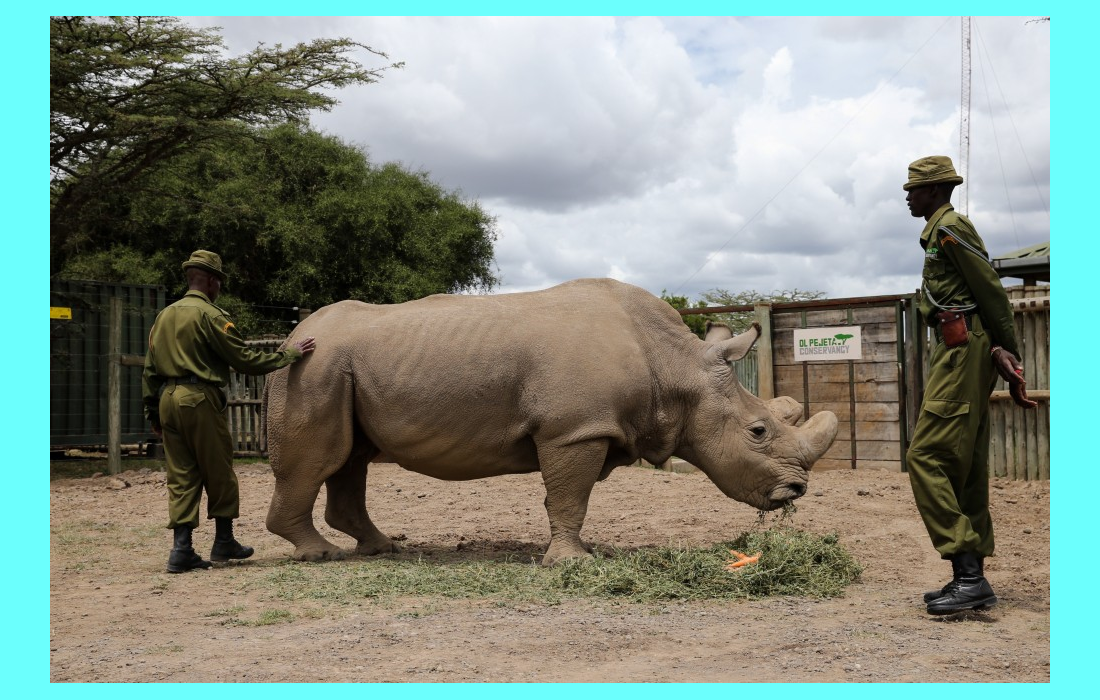
Nairobi, July 18 — Kenya is reaching a critical stage in its mission to save the Northern White Rhino (NWR) from extinction. The Kenya Wildlife Service (KWS) announced on Friday that scientists are now close to achieving pregnancy using advanced artificial reproduction techniques.
The KWS is working with the BioRescue consortium, a group of international scientists and conservationists. Together, they are using modern Assisted Reproduction Technologies (ART) like In Vitro Fertilization (IVF) and embryo transfer to try and bring back this nearly extinct species.
There are only two Northern White Rhinos left in the world—Najin and her daughter Fatu. Both live at the Ol Pejeta Conservancy in Laikipia County, central Kenya. Sadly, the last male NWR died in 2018. That means no natural breeding is possible anymore.
Now, the only chance left is science.
How the process works:
-
Eggs are collected from the two female rhinos.
-
These eggs are quickly flown to a high-tech lab in Cremona, Italy—the Avantea laboratory—within 24 hours.
-
In the lab, the eggs are matured and fertilized using frozen sperm from dead Northern White Rhino males.
-
The resulting embryos are frozen until they are ready to be placed into Southern White Rhino surrogates, who will hopefully carry the pregnancy to term.
KWS Director-General Erustus Kanga said that after years of research and testing, they are now ready to try to create a pregnancy using pure Northern White Rhino embryos.
In fact, the team has already proven that this technology works—they managed to create a pregnancy using a Southern White Rhino embryo in a surrogate. This gives hope that the same can be done using NWR embryos.
The project began seriously in 2019, though conservation work started much earlier. In 2009, four Northern White Rhinos were moved from a zoo in the Czech Republic to Ol Pejeta Conservancy to help them breed in a natural environment. Unfortunately, both remaining males, Sudan and Suni, have since died.
“With no males left, our only hope lies in science and these two remaining females,” KWS said in its statement.
The BioRescue project may be the last chance to save this species, and every step forward brings hope to the global conservation community.

